Trent Erik Boysen is a teaching artist based in Nashville, Tennessee, specializing in Glass as an artistic medium - always exploring what might happen next.
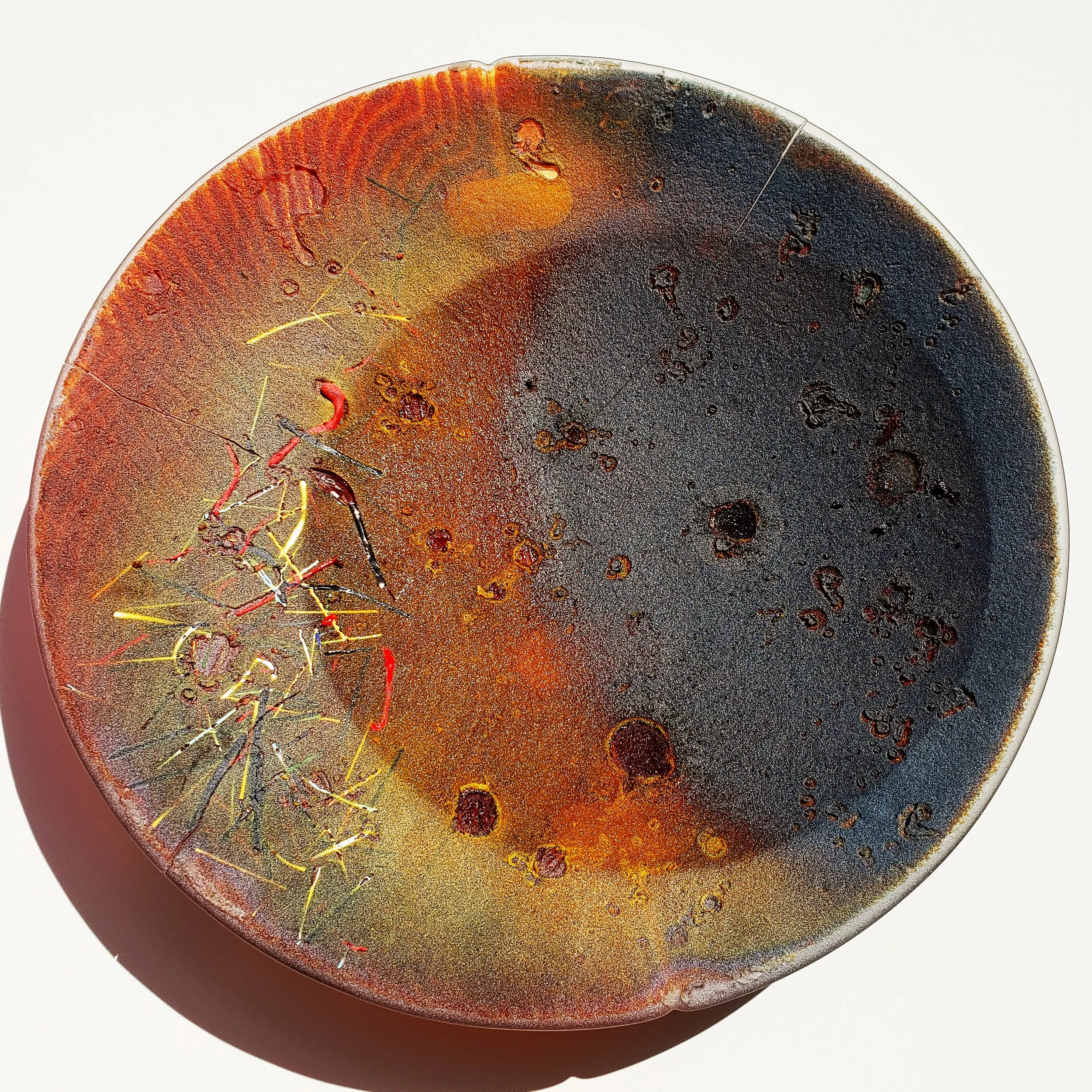
Construction Deconstruction With Flaws.
I teach my students to embrace mistakes, cerebrate what is given and try to learn that intention and outcome are forever battling each other. This piece challenges compatibility, fastness of adhesive, and my ability to deal with the possibility of an ever evolving piece.
This is a first in a series that explores not only current day observational space, but I am fascinated with how early humans developed their knowledge of existence and what is beyond.
Assemblage and Traces
Marking observation. For 20 years my commute was the same route at the same time. I am aware of the position of the sun in the morning and the position of the moon at night as the months and years progress. These bowls are an homage to that.
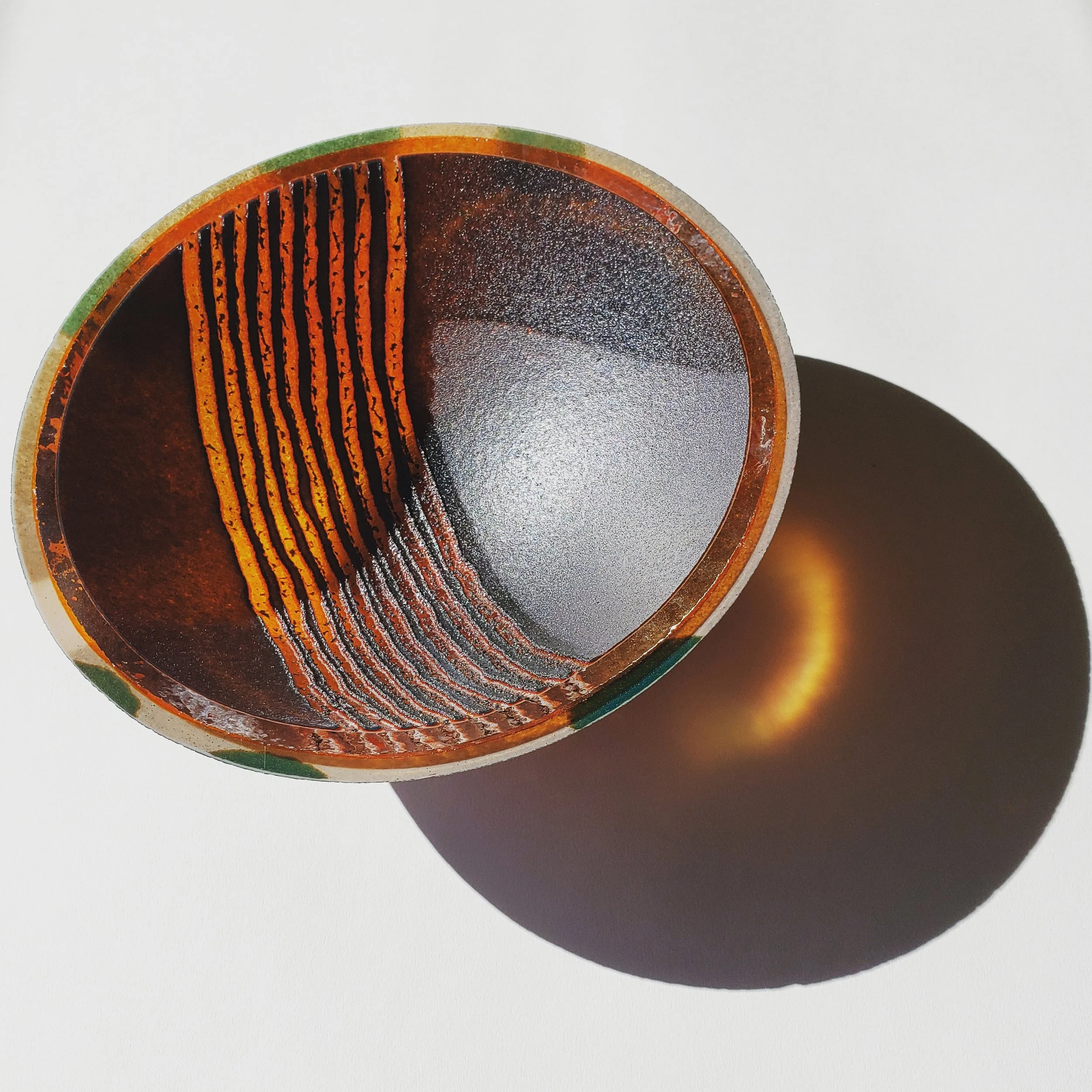
Inspired by the moon and sun’s movement through the seasons, these warm glass bowls translate celestial cycles into tactile form. Gentle curves and layered depth suggest phases, eclipses, and the changing quality of light over the year. The glass is shaped through heat and gravity, allowing each bowl to develop subtle variations that echo nature’s rhythms. The result is a functional object rooted in observation, time, and the quiet beauty of the cosmos.
Celestial Bodies
Using warm glass as both material and metaphor, these works reflect the relationship between light, time, and transformation. The inspiration comes from the cosmos and from the experience of exploring those ideas alongside my oldest daughter—connecting personal wonder with universal forces.
Inspired by astronomical phenomena and the unknown expanses beyond Earth, these artworks investigate space as both a physical and emotional landscape. They reference celestial movement, cosmic patterns, and the human impulse to search for meaning in the infinite.